
Is your cooperative society struggling with unmotivated employees, stagnant growth or poor leadership dynamics? Breaking away from the usual office routine is the fastest way to spark real change. SACCO Training in Lamu offers the perfect distraction-free environment to upskill your team and realign your management goals. By partnering with experts at www.saccochampions.co.ke, you can design customized programs that blend high-level corporate learning with the serene, culturally rich atmosphere of Kenya’s coast.
In this comprehensive guide, we will explore why Lamu is the ultimate destination for capacity building, how to structure staff development and leadership programs and how major economic shifts—like the Dangote Refinery project—are turning Lamu into a premier hub for corporate tourism.
Why Choose Lamu for SACCO Training Retreats?
When planning corporate retreats in Lamu, the destination itself plays a massive role in the success of the program. A standard boardroom in Nairobi or Mombasa often keeps staff tethered to their daily stresses. Lamu, on the other hand, forces a mental reset.
Here is why Lamu stands out for Kenya SACCO training programs:
- Distraction-Free Environment: With no cars and a slow-paced island lifestyle, participants are entirely focused on the training modules. This isolation fosters deep thinking and better team bonding.
- Cultural Richness: Lamu Old Town is a UNESCO World Heritage site. The rich Swahili culture, historic architecture and welcoming locals provide a unique backdrop that inspires creativity and fresh perspectives.
- World-Class Hospitality: From luxury boutique hotels to expansive beachfront resorts, Lamu offers top-tier amenities that cater specifically to executive coaching for SACCOs and large corporate groups.
- Team Bonding Opportunities: Beyond the boardroom, teams can engage in dhow sailing, mangrove exploration and cultural tours. This will naturally build trust and communication among staff.
Key Areas of SACCO Staff Development.
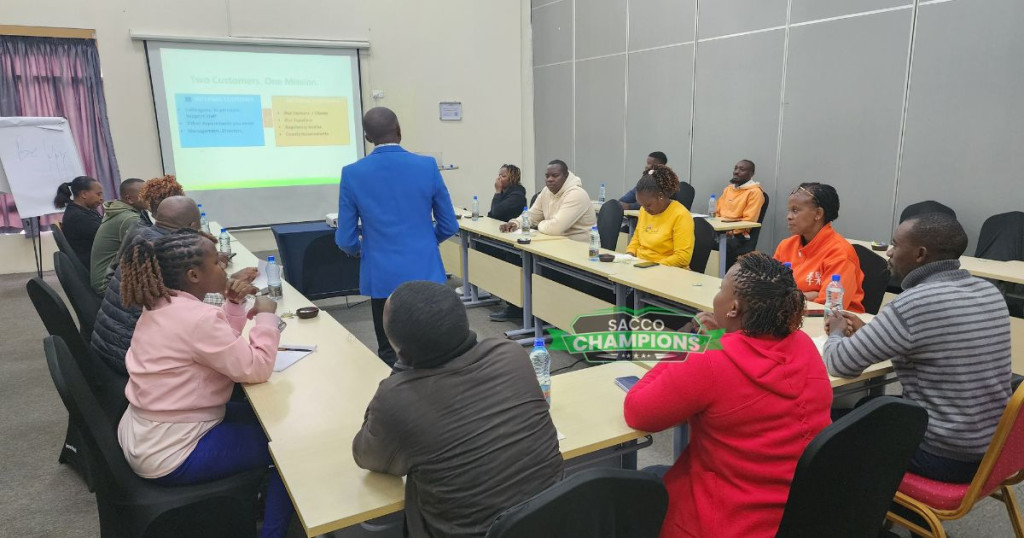
A successful cooperative society relies heavily on the competence and morale of its frontline workers. SACCO Training in Lamu must focus on actionable skills that employees can apply immediately upon returning to the office.
At www.saccochampions.co.ke, we recommend building your Lamu itinerary around these core pillars of SACCO staff development in Kenya:
1. Exceptional Customer Service and Member Retention.
Members are the lifeblood of any SACCO. Training modules should focus on transforming staff from mere transaction processors into financial advisors and relationship managers. Topics should include active listening, conflict resolution and personalizing the member experience.
2. Effective Credit Management and Loan Recovery.
Non-performing loans (NPLs) can cripple a SACCO’s liquidity. Staff development programs must equip credit officers with advanced skills in risk assessment, collateral evaluation and empathetic yet firm loan recovery strategies. Lamu’s relaxed setting is perfect for role-playing these high-stress scenarios.
3. Digital Transformation and Cybersecurity.
As SACCOs digitize their operations—moving to mobile banking and cloud-based ERPs—staff must be trained to handle new technologies. Furthermore, with the rise of financial fraud, cybersecurity awareness is no longer optional. Training should cover data privacy, recognizing phishing attempts and securing member funds.
4. Cross-Selling Financial Products.
Many SACCO members only use one or two products, unaware of the full suite of services available to them. Staff should be trained on how to identify member needs and naturally cross-sell savings accounts, education policies and investment loans.
Elevating Management with SACCO Leadership Training.
While staff development focuses on daily operations, SACCO leadership training is about vision, governance and long-term sustainability. The board of directors and senior management require a different tier of executive coaching for SACCOs.
1. Mastering Corporate Governance.
Many cooperatives fail due to poor governance and a lack of role clarity between the board and the executive management. A dedicated leadership retreat in Lamu provides a neutral ground to hash out governance policies, review the SACCO’s bylaws and ensure compliance with the SACCO Societies Regulatory Authority (SASRA).
2. Strategic Planning and Vision Casting.
Leaders need time away from the daily grind to look at the big picture. Where will the SACCO be in five years? How will it compete with commercial banks and fintech apps? SACCO Training in Lamu allows leaders to engage in deep strategic planning, conduct SWOT analyses and map out future growth trajectories.
3. Succession Planning.
A mark of true leadership is preparing the next generation to take over. Executive coaching sessions should emphasize how to identify internal talent, create mentorship pipelines and ensure business continuity even when key figures retire or move on.
4. Risk Management and Financial Modeling.
Leaders must be equipped to navigate economic downturns, regulatory changes and liquidity crises. Advanced modules on financial modeling and enterprise risk management are essential components of Kenya SACCO capacity building.
The Dangote Refinery and Lamu’s Changing Business Environment.
Lamu is currently undergoing a massive economic transformation. Historically known purely as a cultural and leisure destination, the region is rapidly evolving into a business and industrial hub. A key driver of this shift is the Lamu Port-South Sudan-Ethiopia-Transport (LAPSSET) Corridor and the highly anticipated developments surrounding regional energy projects, including the ripple effects of the Dangote Refinery impact Lamu.
While the Dangote Refinery itself is a Nigerian mega-project, its operational footprint, supply chain demands and the broader push for African energy independence have spurred massive industrial infrastructure investments along the East African coast. Lamu is positioning itself to handle large-scale petroleum, petrochemical and industrial logistics.
So, how does this relate to SACCO Training in Lamu?
- Boom in MICE Tourism: Meetings, Incentives, Conferences, and Exhibitions (MICE) tourism in Lamu is skyrocketing. As industrial players move into the region, hotels are upgrading their conference facilities, making it easier than ever for SACCOs to host high-tech, world-class retreats.
- Inspirational Scale: Taking your team to a region experiencing multi-billion-dollar infrastructure growth changes their mindset. Seeing the scale of the Lamu Port and industrial expansion inspires SACCO leaders to think bigger about their own investment projects and asset bases.
- New Investment Opportunities: For SACCOs looking to diversify their investment portfolios, training in Lamu allows management to scout real estate and industrial opportunities firsthand. The economic boom makes Lamu a prime location for SACCOs to purchase land or finance housing projects for the growing industrial workforce.
Best Venues for SACCO Training and Retreats in Lamu.
Choosing the right venue is critical for the success of your training. You need a space that offers robust conference facilities, reliable internet, and comfortable accommodations, without losing the coastal charm.
Here are some of the best venues for corporate retreats in Lamu:
- The Majlis Resort: Located on Manda Island, this is a premier luxury destination. It offers state-of-the-art conference rooms, high-speed Wi-Fi and expansive grounds for outdoor team-building activities.
- Diamond Beach Village: Ideal for smaller, more intimate executive coaching sessions. It offers an eco-friendly environment that encourages leaders to disconnect from technology and connect with each other.
- Peponi Hotel: A legendary establishment that perfectly balances professional service with laid-back island vibes. It is excellent for board meetings and strategic planning sessions.
- Lamu House Hotel: Situated right in Lamu Old Town, this venue is perfect for teams that want to integrate cultural tours and historic walks into their training itinerary.
Sample SACCO Training Retreat Itinerary in Lamu.
To ensure your investment yields maximum returns, your SACCO Training in Lamu must be carefully structured. Here is a sample 4-day itinerary designed by www.saccochampions.co.ke to balance rigorous learning with restorative downtime.
-
Day 1: Arrival and Alignment.
-
Morning: Flight into Manda Airport, boat transfer to the resort.
-
Afternoon: Welcome lunch, followed by an opening session setting the goals and expectations for the retreat.
-
Evening: Sunset dhow cruise to break the ice and foster informal networking among staff and board members.
-
-
Day 2: Core Staff Development Kenya Modules.
-
Morning: Deep dive into customer service excellence and digital transformation.
-
Afternoon: Group workshops on credit management, loan recovery role-playing and risk assessment.
-
Evening: Free time to explore Lamu Old Town or relax by the beach.
-
-
Day 3: SACCO Leadership Training and Strategy.
-
Morning: Executive coaching for SACCOs focusing on corporate governance, SASRA compliance and succession planning.
-
Afternoon: Outdoor team-building exercises on the beach (trust falls, problem-solving games, communication drills).
-
Evening: Gala dinner with award presentations to recognize top-performing employees.
-
-
Day 4: Action Planning and Departure.
-
Morning: Final session to draft a 90-day action plan. What specific changes will the team implement on Monday morning?
-
Afternoon: Checkout, final group photos and boat transfer back to Manda Airport for departure.
-
How to Measure the Results of a SACCO Training Retreat.
Sending your team to the coast is a significant financial investment. Therefore, management must measure the Return on Investment (ROI) of Kenya SACCO capacity building.
To ensure the training was effective, track these Key Performance Indicators (KPIs) in the months following the retreat:
- Employee Retention Rates: Are your top talents staying with the SACCO longer?
- Customer Satisfaction Scores: Are members reporting better service and faster loan processing times?
- NPL Ratios: Has the training improved your credit department’s ability to recover bad debt?
- Cross-Selling Metrics: Are employees successfully opening more accounts per member?
By clearly defining these metrics before the trip, you ensure that the retreat is not just a vacation, but a strategic business maneuver.
10 Frequently Asked Questions (FAQs) About SACCO Training in Lamu.
1. Why should we choose Lamu over Nairobi or Naivasha for SACCO training?
Lamu offers a completely distraction-free environment. The island’s slow pace, lack of cars, and rich culture provide a mental reset that busy cities cannot offer, leading to better focus and team bonding.
2. How do we organize a customized training program?
You can partner with expert facilitators like www.saccochampions.co.ke. They will conduct a needs assessment for your SACCO and design a tailored curriculum covering everything from loan recovery to corporate governance.
3. Is Lamu safe for large corporate groups?
Absolutely. Lamu is a highly secure, peaceful island with a strong tourism police presence. The resorts on Manda Island and Shela Village are exceptionally safe for corporate retreats in Lamu.
4. How does the Dangote Refinery impact Lamu MICE tourism?
Large-scale industrial developments, including the LAPSSET corridor and projects inspired by the Dangote Refinery impact Lamu, have driven massive upgrades in local infrastructure. This has led to better conference facilities, more reliable internet and a boom in corporate MICE tourism.
5. What is the ideal duration for a SACCO training retreat?
A 3 to 4-day retreat is highly recommended. This allows enough time for intensive learning modules, strategic planning and essential team-building activities without keeping staff away from the office for too long.
6. Can we combine staff development with board leadership training?
Yes. Many SACCOs opt for a hybrid model where mornings are spent in joint sessions for alignment. While afternoons are split into specific staff development Kenya modules and exclusive executive coaching for SACCOs.
7. What are the costs associated with SACCO Training in Lamu?
Costs vary depending on the resort, the duration, and the number of participants. However, it is an investment that pays off through higher productivity.
8. Do Lamu hotels have modern conference facilities?
Yes. Top venues like The Majlis and Lamu House are fully equipped with projectors, PA systems, high-speed Wi-Fi and air-conditioned boardrooms suitable for Kenya SACCO training programs.
9. What team-building activities are available in Lamu?
Lamu offers unique activities such as sunset dhow sailing, historical tours of Lamu Old Town, beach olympics and mangrove forest explorations. These activities are excellent for breaking down office silos.
10. How soon will we see the impact of the training?
With actionable modules and a solid 90-day post-retreat implementation plan, SACCOs typically see improvements. For example in team morale immediately, with measurable changes in customer service and loan recovery within the first quarter.
Conclusion.
In an increasingly competitive financial sector, your cooperative society cannot afford to rely on outdated strategies and uninspired employees. SACCO Training in Lamu is more than just a getaway; it is a strategic investment in the future of your institution.
Furthermore, as the region evolves into a corporate hub—driven by infrastructural booms like the LAPSSET corridor and the Dangote Refinery impact Lamu—there has never been a better time to expose your team to this inspiring environment.
Are you ready to elevate your cooperative society to the next tier of financial success? Start planning your ultimate staff development and leadership retreat today. Visit www.saccochampions.co.ke to discover tailored corporate training packages, expert facilitation, and comprehensive MICE tourism solutions designed exclusively for SACCOs.