

Is your cooperative facing rising loan defaults, strict regulatory changes, or operational delays? Investing in In-House SACCO Training in Kenya is the most practical and affordable way to sharpen staff skills, train board members and protect member deposits without disrupting daily operations. By partnering with experienced corporate trainers at www.saccochampions.co.ke, your cooperative gets customized, practical solutions built around your exact operational needs and internal policies.
What Is In-House SACCO Training in Kenya?
In-house SACCO training is a customized professional development program delivered directly at your cooperative’s premises, branch offices or designated corporate venue. Unlike general public seminars where employees from different companies attend a standardized workshop, on-site training focuses exclusively on your institution’s specific goals, audit reports and daily challenges.
In Kenya’s fast-changing financial sector, SACCOs face unique demands from regulators like the SACCO Societies Regulatory Authority (SASRA). In-house training brings seasoned industry facilitators directly to your team. Whether you operate a Deposit-Taking (DT) SACCO or a Non-Deposit Taking (NWDT) SACCO, on-site learning allows your board, management and branch staff to learn together using real operational data.

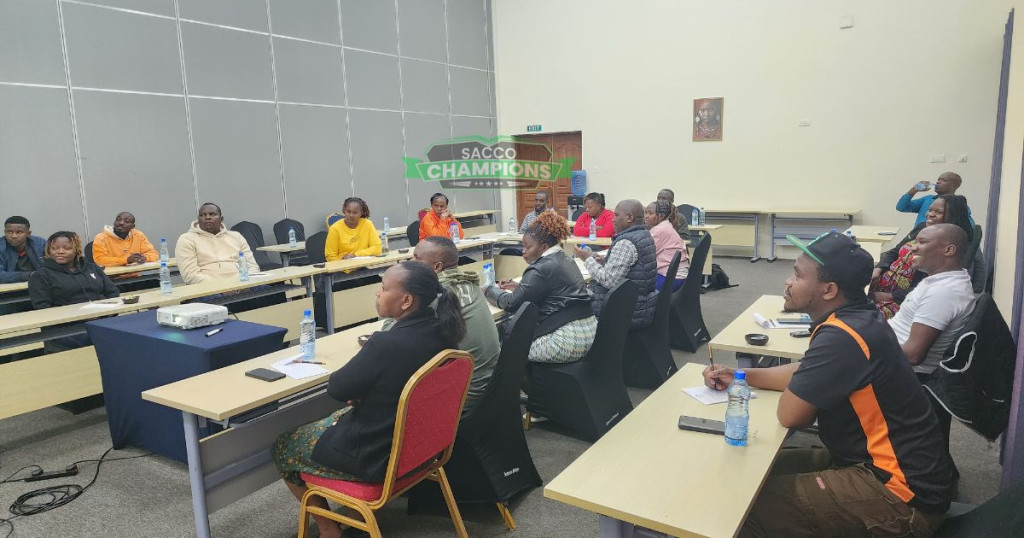
Key Benefits of In-House SACCO Training in Kenya.
Choosing customized on-premise training offers significant advantages over sending individual employees to distant public workshops.
1. High Cost Savings for Large Teams.
Sending twenty branch managers or board members to off-site hotel conferences involves heavy expenses. You must pay for individual registration fees, hotel accommodation, meals and per diem travel allowances. In-house training eliminates hotel room costs and travel expenses entirely. You pay a single daily facilitator fee, making it the most budget-friendly option for medium and large cooperatives.
2. Fully Customized Learning Content.
Public seminars cover general industry topics. In contrast, on-site training uses your specific credit policy, financial statements and operational manuals. Facilitators tailor case studies to address your real-world bottlenecks, such as reducing non-performing loans (NPLs) or resolving recent audit queries.
3. Minimal Disruption to Daily Operations.
Closing branch counters or leaving member services understaffed damages your institutional reputation. In-house training offers flexible scheduling. You can organize half-day sessions, weekend bootcamps or departmental shifts so your Front Office Services Activity (FOSA) continues running smoothly.
4. Stronger Team Unity and Shared Vision.
When board members, executive managers, credit officers and tellers learn together, departmental walls crumble. In-house workshops build open dialogue between governance boards and operational staff, ensuring everyone works toward the same strategic objectives.
5. Immediate Practical Application.
Because training happens using your actual software systems, loan appraisal templates and risk frameworks, employees apply what they learn immediately. Staff return to their desks the next morning with practical tools to fix operational errors instantly.
Essential Courses Offered Under In-House SACCO Training.
To build a resilient and profitable institution, your workforce requires training across technical, financial and regulatory areas.
1. SASRA Regulatory Compliance and Corporate Governance.
Regulatory compliance is mandatory for every licensed SACCO in Kenya. This course helps board members and top managers understand their legal obligations under the SACCO Societies Act.
- Fiduciary Responsibilities: Understanding board oversight versus daily operational management.
- Prudential Standards: Monitoring capital adequacy ratios, core capital levels and statutory liquidity limits.
- Fit and Proper Standards: Meeting SASRA director vetting requirements and maintaining ethical leadership.
- Policy Formulation: Creating robust credit, HR, investment and risk management policies.
2. Credit Risk Management, Loan Appraisal and Delinquency Control.
Loans represent the primary revenue source for financial cooperatives, making credit management a critical operational focus.
- Loan Assessment: Analyzing member creditworthiness, cash flows and collateral quality.
- Debt Collection Strategies: Implementing effective debt recovery steps while maintaining good member relationships.
- NPL Reduction: Identifying early warnings of loan default and restructuring troubled facilities safely.
- Guarantor Protection: Managing guarantor risks and enforcing legal recovery mechanisms.
3. Financial Management, Budgeting and Liquidity Control.
Sound financial management guarantees long-term stability and consistent dividend payouts to members.
- Financial Dashboard Interpretation: Teaching non-accountant board members how to read balance sheets and income statements.
- Asset-Liability Management (ALM): Balancing short-term member savings with long-term loan disbursements.
- Budgeting and Cost Control: Managing operational expenses to maximize annual surpluses.
- Dividend Strategy: Calculating safe dividend and interest rebate declarations without breaching liquidity reserves.
4. FOSA Operations, Anti-Money Laundering (AML) and Fraud Prevention.
Front Office Services Activity (FOSA) staff handle cash and digital transactions daily, making them your first line of defense against financial crime.
- AML and Counter-Terrorism Financing (CFT): Spotting suspicious transactions and filing mandatory regulatory reports.
- Teller Efficiency: Improving transaction speed, cash reconciliation and vault safety procedures.
- Internal Fraud Prevention: Setting up clear segregation of duties to eliminate embezzlement opportunities.
5. Cybersecurity, Data Protection and Digital Banking Security.
As cooperatives roll out USSD platforms, mobile apps and internet banking, cyber threats increase rapidly.
- Data Protection Act Compliance: Handling member personal data legally to avoid heavy statutory fines.
- Social Engineering Awareness: Educating staff on phishing emails, credential theft and phone scams.
- IT Risk Audits: Conducting continuous system vulnerability reviews and securing database backups.
6. Exceptional Customer Service and Member Experience.
Satisfied members stay loyal, deposit more funds and refer new members organically.
- Professional Communication: Training tellers and relationship managers on handling difficult member complaints.
- Cross-Selling Products: Teaching staff how to market new loan products and savings plans gracefully.
- Digital Onboarding: Streamlining member registration processes for fast account activation.
Flexible Delivery Options for SACCO Training in Kenya.
Every institution has unique work routines and operational commitments. Professional providers like www.saccochampions.co.ke offer versatile training delivery options to match your schedule.
+-------------------------------------------------------------------+
|                  TRAINING DELIVERY OPTIONS                        |
+-------------------------------------------------------------------+
| 1. On-Site Physical   │ Fully on-premise, highly interactive       |
| 2. Virtual/Online     │ Cost-effective webinars for remote teams   |
| 3. Hybrid Model       │ Online theory combined with physical sessions|
| 4. Weekend Bootcamps  │ Intensive Saturday training for leadership |
+-------------------------------------------------------------------+
Option 1: Fully On-Site Physical Workshops.
Facilitators come directly to your boardroom or headquarters. This traditional option works best for practical exercises, credit roleplays, group problem-solving and board retreats.
Option 2: Live Virtual Interactive Masterclasses.
For organizations with widespread branches across multiple Kenyan counties, virtual training via video conferencing reduces travel budgets. Branch staff attend interactive morning or afternoon web sessions right from their desks.
Option 3: Hybrid Learning Model.
This option combines online self-paced reading with focused on-site practical sessions. Employees complete theoretical modules online, followed by a one-day intensive physical workshop dedicated to case studies and group discussions.
Option 4: Executive Weekend & Evening Bootcamps.
Board members and senior managers often struggle to dedicate full weekdays to training. Weekend bootcamps allow leaders to complete governance and compliance modules without taking time away from weekday operations.
Cost Comparison: In-House Training vs. Public Off-Site Seminars.
Understanding the financial impact helps board finance committees make wise decisions. Below is a realistic comparative breakdown of hosting on-site training against sending staff to public seminars:
| Expense Category | Public Off-Site Seminar | In-House SACCO Training |
| Registration Fees | Expensive individual per-person fees | Single flat daily facilitation fee covering the entire group |
| Accommodation & Meals | High per-night hotel and meal charges | Zero (Uses internal boardroom/office space) |
| Travel & Per Diem | Costly individual travel allowances | Minimal local transport for facilitators |
| Customization Level | Generic industry overview | 100% customized using internal policy books |
| Operational Impact | High (Staff absent from office for days) | Low (Flexible hours, staggered shifts) |
| Estimated Total Cost | Significantly higher overall cost | Highly budget-friendly and cost-effective |
Note: In-house options deliver massive cost savings—often up to 75%—while providing customized, high-value training tailored directly to your institution.
How to Organize an Effective In-House Training Program.
Executing a successful training program requires clear planning. Follow these five straightforward steps to maximize your return on investment:
Step 1: Conduct a Needs Assessment.
Examine recent internal and external audit reports, loan delinquency figures, member complaint registers and SASRA inspection findings. Identify the exact areas where your team needs improvement.
Step 2: Define Clear KPIs.
Set measurable performance metrics for the training. For example, your target might be: “Reduce non-performing loans from 8% to below 5% within six months” or “Achieve 100% SASRA compliance on liquidity ratios.”
Step 3: Partner with Proven Experts.
Select a training provider with deep expertise in Kenyan cooperative law, SASRA regulations and credit management. Visit www.saccochampions.co.ke to access certified trainers who understand local market conditions.
Step 4: Schedule and Tailor Content.
Provide your internal policies, loan manuals and target metrics to the facilitators in advance. This allows them to build custom case studies and exercises tailored to your team.
Step 5: Conduct Post-Training Reviews.
Evaluate learning retention two to three months after the workshop. Track changes in teller transaction speeds, loan recovery rates and policy compliance to ensure lasting progress.
10 Frequently Asked Questions About In-House SACCO Training in Kenya.
1. What is In-House SACCO Training in Kenya?
In-house training is a customized learning program conducted directly on a cooperative’s premises, branch offices or selected venue. It is designed around the institution’s specific operational needs, policies and staff skill gaps.
2. How much does in-house SACCO training cost in Kenya?
Costs vary based on duration, group size and course complexity. However, because you pay a single flat facilitation fee for the entire group rather than individual registration fees, it is vastly more cost-effective than public seminars.
3. Is in-house training better than attending public off-site workshops?
Yes, especially for groups larger than five people. In-house training uses your real financial data, addresses your specific audit queries, eliminates expensive travel and accommodation costs and minimizes operational downtime.
4. Which topics are covered under SACCO employee training?
Core topics include SASRA regulatory compliance, credit appraisal and debt recovery, FOSA tellering operations, cybersecurity and data protection, financial statement analysis and customer service excellence.
5. Who should attend in-house training sessions?
Programs are structured for all organizational levels, including the Board of Directors, Supervisory Committee members, Chief Executive Officers, branch managers, credit officers, accountants and front-office staff.
6. Does in-house training help reduce non-performing loans (NPLs)?
Yes. Specialized credit training equips your team with advanced loan appraisal skills, risk evaluation method and proactive debt collection techniques, directly lowering loan default rates.
7. How long do in-house training programs take?
Program durations range from single-day intensive workshops to multi-day bootcamps or multi-week modular courses, depending on your schedule and training objectives.
8. Can small or non-deposit-taking SACCOs afford in-house training?
Yes! In-house training is ideal for smaller cooperatives because it eliminates expensive hotel accommodation and travel allowances, making elite corporate training highly accessible.
9. How does in-house training ensure SASRA compliance?
Facilitators review current SASRA prudential guidelines, capital adequacy requirements, and reporting standards with your team. They help you identify compliance gaps and update internal policies accordingly.
10. How do I book an in-house training session for my SACCO?
Booking is easy. Contact the expert team at www.saccochampions.co.ke, share your team size and training goals, and receive a customized curriculum and proposal.
Conclusion: In-House SACCO Training in Kenya.
Building a compliant, financially stable and growing cooperative requires a well-trained workforce. Relying on outdated methods or generic seminars leaves your institution vulnerable to loan defaults, compliance penalties and operational errors. By investing in structured In-House SACCO Training in Kenya, you equip your board, management and staff with practical skills tailored directly to your institution’s needs.
From lowering travel expenses to solving real audit challenges, on-site training provides the highest return on investment for progressive financial cooperatives. Take charge of your institution’s growth and compliance today. Visit www.saccochampions.co.ke to book your customized training program and transform your team into industry leaders!