

Why SACCO Risk Management Training is Essential Today.
The cooperative sector has grown tremendously, becoming a primary driver of financial inclusion and wealth creation for millions. However, rapid growth brings about new and complex vulnerabilities. Savings and Credit Cooperative Organizations handle billions of shillings in member deposits. Therefore making them highly sensitive to economic shifts, internal fraud and external cyber threats.
Without a solid risk management framework, cooperatives operate blindly. Relying purely on traditional management methods often leaves the institution exposed to sudden financial shocks. This is where professional training becomes invaluable. It shifts the organizational mindset from reacting to crises to anticipating and preventing them. When leaders understand how to spot warning signs early, they make better decisions that safeguard the institution’s long-term sustainability.
Structured training programs ensure that everyone from the Board of Directors to the frontline loan officers understands their role in minimizing exposure. Through tailored capacity-building programs, institutions can foster a culture of accountability and transparency that naturally deters mismanagement.

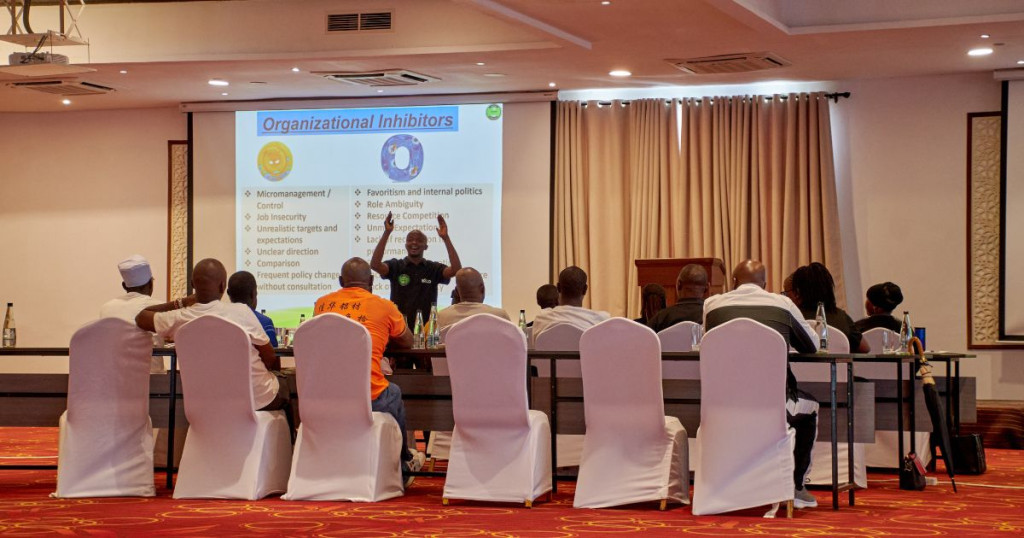
The Major Risks Facing Cooperative Societies.
To effectively protect member funds, leaders must first understand the specific threats they are up against. A comprehensive training program extensively covers the following key financial and operational risks:
1. Credit Risk Management.
Credit risk is the most common and damaging threat to financial institutions. It occurs when members fail to repay their loans as agreed, leading to high levels of non-performing loans (NPLs). High default rates quickly erode profitability and threaten the institution’s ability to issue new loans.
Training helps loan committees and credit officers tackle the root causes of credit risk, which often include:
- Poor Credit Appraisal: Failing to accurately assess a borrower’s ability to repay.
- Weak Loan Monitoring: Lack of follow-up after the loan has been disbursed.
- Over-indebtedness: Lending to members who already have multiple heavy financial commitments.
Through targeted training, credit teams learn how to develop stringent credit policies, improve appraisal techniques and implement effective debt recovery strategies that do not alienate members.
2. Liquidity Risk.
Liquidity risk happens when a cooperative society cannot meet its short-term financial obligations, such as funding approved loans, paying operational expenses or processing member withdrawals. Even if an institution is profitable on paper, running out of liquid cash can cause panic among members and trigger a run on deposits.
A robust training curriculum teaches managers how to monitor cash flow, balance the loan-to-deposit ratio and maintain adequate liquid reserves. Participants learn how to forecast financial trends and establish emergency liquidity plans to ensure the institution always has enough cash on hand to operate smoothly.
3. Operational Risk and Internal Controls.
Operational risk stems from failed internal processes, human error, system breakdowns or external events like fraud. In many cases, financial losses occur simply because internal controls were either weak or completely ignored.
Effective training highlights the importance of:
- Segregation of Duties: Ensuring that no single employee has control over an entire financial transaction from start to finish.
- Authorization Limits: Setting clear guidelines on who can approve certain amounts of money.
- System Security: Protecting digital platforms against cyber-attacks and unauthorized access.
By strengthening operational controls, management significantly reduces the loopholes that internal fraudsters often exploit.
4. Compliance Risk and SASRA Regulations.
Kenya operates under a strict regulatory framework governed by the Sacco Societies Regulatory Authority (SASRA). Compliance risk is the threat of legal penalties, financial sanctions and reputational damage that arises when an institution fails to follow industry laws and prudential standards.
SASRA compliance training ensures that board members and executives stay updated on the latest legal requirements. Ignorance of the law is never an excuse. Proper training guarantees that financial reporting is accurate, governance structures are sound and all statutory deductions and returns are filed correctly and on time.
Core Pillars of Effective Risk Management Training.
High-quality training programs are not just about theory; they focus on practical, actionable steps that can be implemented immediately. When you enroll your team at www.saccochampions.co.ke, the curriculum is built on several vital pillars.
1. Enterprise Risk Management (ERM).
Enterprise Risk Management is a holistic approach to identifying and managing risks across the entire organization. Instead of treating risks in isolated departments, ERM looks at how a risk in one area (like a delayed IT system upgrade) might trigger a risk in another area (like compromised financial data). Training equips leaders with tools like risk matrices and risk registers to map out the probability and impact of various threats.
2. Strengthening SACCO Governance.
Good governance is the bedrock of risk management. The training emphasizes the distinct roles of the Board of Directors, the Supervisory Committee and Senior Management. It eliminates the overlap of duties and conflicts of interest that often paralyze decision-making. Board members are trained on how to provide effective oversight without micromanaging daily operations.
3. Advanced Financial Reporting.
Clear, transparent and accurate financial reporting allows leaders to see the true health of the institution. Training covers how to interpret complex financial statements, audit reports and compliance dashboards. When leaders understand the numbers, they can easily spot discrepancies and take corrective action before a minor issue snowballs into a major crisis.
The Benefits of Comprehensive Board and Management Training.
Investing time and resources into professional capacity building yields immense, long-lasting rewards for the institution and its members.
- Protection of Member Savings: The primary duty of any cooperative is to safeguard the money entrusted to it by its members. Strong internal controls and early risk detection mechanisms ensure that member funds are secure from embezzlement and bad investments.
- Enhanced Member Trust and Confidence: Members want to know their money is in safe hands. When an institution is known for strong governance and regulatory compliance, it naturally attracts more deposits and new members.
- Reduced Financial Losses: By improving credit appraisal skills and fraud detection, cooperatives drastically cut down on financial leakage caused by bad loans and internal theft.
- Better Strategic Decision-Making: Trained leaders base their decisions on data and risk assessments rather than guesswork or political pressure. This leads to smarter investments and sustainable growth.
- Seamless SASRA Compliance: Avoiding regulatory fines saves the institution money and protects its public reputation. Trained compliance officers ensure that the institution always operates within the legal boundaries set by the government.
Who Needs This Specialized Training?
For a risk management framework to be effective, everyone in a leadership or oversight position must be on the same page.
- The Board of Directors: They are ultimately responsible for setting the risk appetite and approving policies. Training helps them understand how to govern effectively and hold management accountable.
- The Supervisory Committee: As the internal watchdogs, this committee needs specialized skills to audit operations, review internal controls and ensure policies are being followed correctly.
- Senior Management and CEOs: They are tasked with executing the board’s policies and managing day-to-day operations. Training gives them the technical skills to implement internal controls and monitor operational risks.
- Credit and Risk Officers: These frontline employees need hands-on training in loan appraisal, debt recovery and daily risk monitoring to prevent bad loans from being issued in the first place.
Why Choose www.saccochampions.co.ke?
Finding the right training partner is the difference between a transformative experience and a waste of resources. www.saccochampions.co.ke stands out as the premier provider of cooperative capacity building in the region.
- Industry Experts: The training is facilitated by seasoned professionals who deeply understand the unique challenges facing Kenyan cooperative societies.
- Practical and Tailored Solutions: The programs are not generic. They use real-life case studies and offer solutions that can be applied to your specific operational environment immediately.
- Continuous Support: The relationship does not end when the training session is over. They provide continuous guidance to ensure the successful implementation of the strategies discussed.
Building a Risk-Aware Culture After Training.
Knowledge gained during a training session is only valuable if it is implemented. After completing the training, management should focus on building a permanent risk-aware culture.
First, the board must revise and approve updated risk management policies to reflect modern threats. Secondly, the institution should implement regular, independent risk assessments to continuously evaluate vulnerabilities. Finally, risk management should become a standard agenda item in all board and management meetings, ensuring it remains a top priority year-round.
Conclusion: SACCO Risk Management Training in Kenya.
Navigating the financial landscape requires sharp foresight, strict discipline, and continuous education. SACCO Risk Management Training in Kenya is the ultimate tool for empowering your leadership team to protect member funds, ensure strict SASRA compliance and drive sustainable growth. By investing in professional capacity building, you transform potential vulnerabilities into operational strengths.
Do not wait for a financial crisis to expose the gaps in your internal controls. Take a proactive stance today by equipping your Board of Directors and management with the skills they need to govern effectively. Visit www.saccochampions.co.ke to book your specialized training program and secure the financial future of your cooperative.
10 Frequently Asked Questions (FAQs) About SACCO Risk Management Training in Kenya.
1. What is SACCO Risk Management Training in Kenya?
It is a specialized educational program designed to equip cooperative leaders, board members and staff with the skills to identify, assess and minimize financial and operational risks. It ensures institutions remain stable and compliant with local laws. You can access top-tier programs at www.saccochampions.co.ke.
2. Why is SASRA compliance training important for board members?
SASRA sets strict regulatory standards for cooperatives. Compliance training ensures board members understand these legal obligations, preventing costly fines, legal sanctions and protecting the institution’s reputation.
3. How does risk management training help reduce non-performing loans?
The training focuses heavily on credit risk management. It teaches credit officers and committees how to conduct rigorous borrower appraisals, monitor active loans and enforce better debt collection policies, thereby significantly lowering default rates.
4. Who should attend these training programs?
Ideally, the Board of Directors, the Supervisory Committee, Senior Management, Internal Auditors and Credit Officers should all receive tailored training to ensure a unified approach to governance and risk control.
5. What is liquidity risk and how can training prevent it?
Liquidity risk is the inability of an institution to meet its immediate cash demands, like member withdrawals or loan disbursements. Training teaches managers how to monitor cash flows and maintain adequate reserves to avoid financial paralysis.
6. How do internal controls prevent internal fraud?
Internal controls, such as the segregation of duties and strict authorization limits, make it incredibly difficult for a single person to manipulate financial records or embezzle funds without being detected. Training shows leaders how to design and enforce these controls.
7. How often should a cooperative conduct risk management training?
Because the financial and regulatory landscape is always evolving, it is highly recommended to conduct refresher training at least once a year. New board members should also be trained immediately upon taking office.
8. What is Enterprise Risk Management (ERM)?
ERM is a comprehensive approach that looks at the institution as a whole, identifying how risks in one department (like IT) affect other areas (like finance or operations). It provides a holistic strategy for institutional safety.
9. Can specialized training improve member trust?
Absolutely. When members see that an institution is well-governed, compliant with regulators and actively protecting their savings through solid risk management, their confidence grows, leading to higher deposit retention.
10. Where can we book professional risk management training?
For expert-led, highly practical and customized training solutions, you should visit www.saccochampions.co.ke. They offer industry-leading courses designed to solve real-world cooperative challenges.