
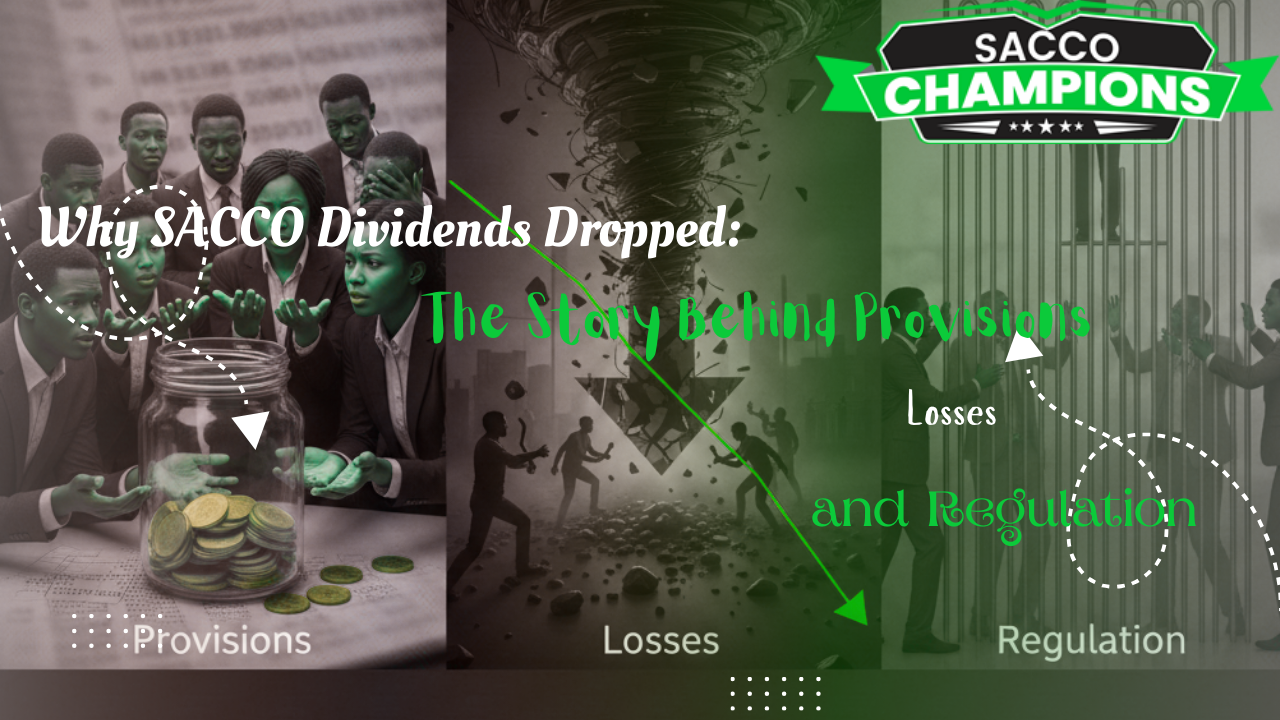
Many SACCO members were surprised when dividends and rebates dropped. Questions began circulating quickly. Was the SACCO mismanaged? Did leaders misuse funds? Or was something else happening behind the scenes? The truth is more complex, and understanding it requires looking at two key issues that affected SACCO finances at the same time.
The KUSCCO Investment Losses
Several SACCOs had invested members’ money in an apex body known as KUSCCO. Unfortunately, some of these investments were lost or became unrecoverable. Once it became clear that this money could not be recovered, SACCOs were required by the regulator to account for the loss properly.
Rather than forcing SACCOs to absorb the entire loss in one year, SASRA guided them to spread the loss over five years. This process is known as provisioning. For example, if a SACCO had invested KES 10 million in KUSCCO, it was required to set aside KES 2 million every year for five years.
This annual provision directly reduced the SACCO’s surplus. Since dividends and rebates are paid from surplus, members automatically receive less. In simple terms, the SACCO first had to “replace” the lost money on paper before sharing any surplus with members.
Why Provisioning Affects Dividends
Provisioning does not mean money is physically taken away and locked in a vault. It means the SACCO sets aside money in its accounts to reflect a loss or risk. From an accounting perspective, this provision is charged to the income statement.
When the income statement is debited, total income reduces. When income reduces, the amount available for distribution to members also reduces. Therefore, even if the SACCO performed well operationally, dividends still dropped because part of the income was used to cover past losses.Check out :SaccoChampions.co.ke to learn more about SACCO innovation and training opportunities, including anti-money laundering training.
The Second Pressure: Non-Performing Loans
At the same time, SACCOs were also required to provide for non-performing loans (NPLs). Not every loan issued is fully repaid. In lending, it is expected that a small percentage of borrowers will default.
The acceptable industry limit is usually 5%, known as PAR (Portfolio at Risk). This means that out of every 100 borrowers, about five may fail to repay. Regulators require SACCOs to anticipate this risk and make provisions for it.
If SACCOs issue loans to members who do not fully qualify, the risk increases. Once loans become delinquent, the SACCO must again make provisions. Just like with the KUSCCO losses, this provision is charged to the income statement and reduces surplus.
The Double Impact on Members
This is where the real impact was felt. SACCOs were dealing with two pressures at once. First, they were providing for KUSCCO investment losses. Second, they were providing for non-performing loans. Both provisions reduced income.
As a result, the pool of money available for dividends and rebates shrank. Members felt the effect through lower payouts, even though the SACCOs were following regulatory guidance and sound financial practices. For a detailed understanding of how SACCOs should report and manage finances, explore this guide: Sacco Financial Management and Reporting.
Was This Mismanagement?
In most cases, the reduced dividends were not caused by poor performance in the current year. Instead, they reflected the delayed impact of past decisions and risks now being formally recognized. SASRA’s role was to ensure transparency, protect members’ deposits, and prevent SACCOs from presenting overstated profits.
Although painful in the short term, provisioning strengthens SACCOs in the long run. It forces honesty in reporting, improves risk management, and protects members from sudden financial shocks.
The Bigger Picture for SACCO Members
Lower dividends are never welcome. However, they are sometimes a sign that a SACCO is correcting its financial position rather than hiding problems. By providing for losses and risky loans, SACCOs position themselves for stability, sustainability, and future growth.
Understanding this process helps members see beyond the numbers and appreciate the importance of regulation, accountability, and prudent financial management. Visit our website :https://saccochampions.co.ke/ to learn more about SACCOs, their operations, and available training programs that empower both members and leaders to thrive in the digital age. You can also check our main website, Eagles Management Consultant, for more insights and updates on team building and wellness programs.
Enquire/Request Quote Here